Episode 114
Do You Really Need a Capital Campaign?
A multi-year campaign can push visible results three to five years out. A short fundraising sprint with a hard deadline puts donor money to work in months.
Published
Listen On:
Episode 114
A multi-year campaign can push visible results three to five years out. A short fundraising sprint with a hard deadline puts donor money to work in months.
Published
Listen On:
When an organization needs a lot of money, the reflex is a capital campaign. Write the case, set a big number, spend a couple of years collecting pledges, then a couple more building. I understand the appeal. A big number looks serious to a board.
Jonathan is facing that choice at the Seymour Center right now. The exhibit hall needs more hands-on science and a modern visitor experience, and a full campaign would put the first visible result three to five years away. He's taking a different route: raise what he can by December 31st, add it to the money already in the bank, and start building with whatever that adds up to.
I like this for a few reasons. The deadline is real, so the urgency is honest. Every school group that comes through the doors in the meantime gets a better experience sooner. And donors watch their gift turn into something they can touch within months, which builds more trust than a pledge card ever will.
Some projects can't be phased. If you're putting up a new building, you need the full amount before you hire the architect. Plenty of what gets packaged into campaigns could be funded in smaller pieces, and we default to the big campaign out of habit..
This approach has limits. Restricted gifts tied to one project at a time won't pay salaries, so it works best alongside steady operating support and earned revenue.
Before your board signs off on the next campaign, ask what you could start building with the money you already have, and what it costs your mission to wait.
Episode Highlights:
[00:01:20] A multi-year capital campaign or a short fundraising sprint
[00:02:50] When a full capital campaign is the right call
[00:04:20] Why "we need money to do our stuff" doesn't move donors
[00:05:25] Setting a December 31st deadline and building with what you raise
[00:06:25] Impact opportunity cost: what visitors miss while you fundraise
[00:07:15] People want to support organizations in motion
[00:09:10] Putting gifts to use right away as a trust builder
[00:11:20] The pitfalls of funding an organization one project at a time
[00:12:35] Getting more people in the door to strengthen earned revenue
[00:15:00] Does raising in sprints look like flying by the seat of your pants?
[00:16:40] Earning the credibility to move fast, from the blue whale skeleton on
[00:22:30] Shifting funding flows and the third wave of philanthropy
Notable Quotes:
[00:04:20] "When you really drill down to the simplest form of fundraising, we need money to do our stuff. It's really that simple. It's not a very compelling fundraising narrative." Eric Ressler
[00:06:00] "You have an opportunity to meet the moment, but even if you don't, we're moving." Jonathan Hicken
[00:06:45] "I shudder thinking about years passing, not delivering the best that we could in service of some big audacious, maybe even ego driven goal." Jonathan Hicken
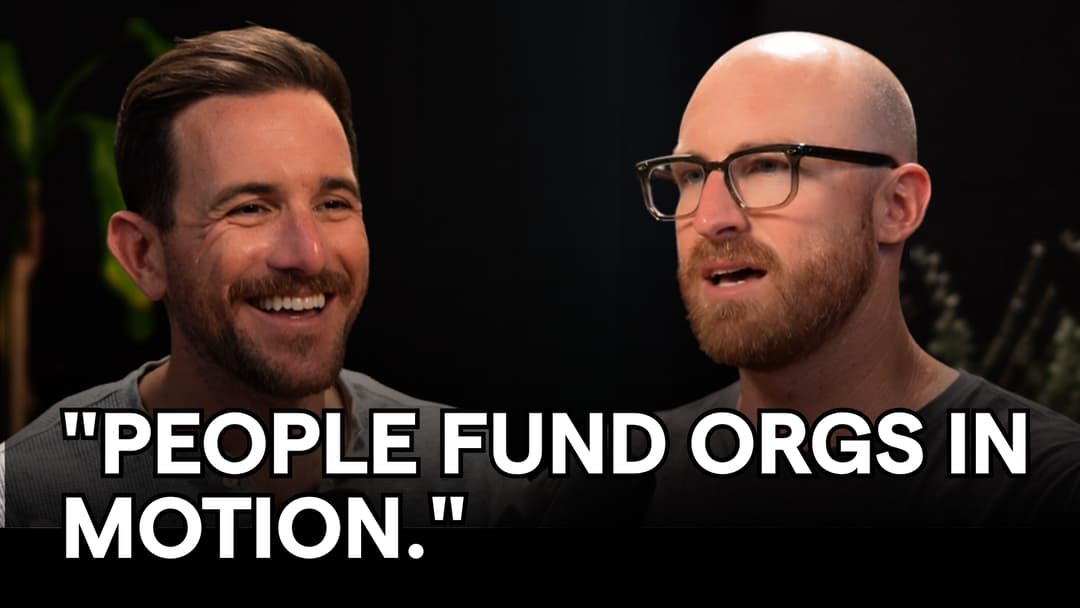
[00:07:40] "People want to support organizations in motion. I believe that strongly." Eric Ressler
[00:09:20] "If I can demonstrate that you made a donation and I'm putting that money to use right away, that is a trust building opportunity." Jonathan Hicken
[00:16:30] "The type of donor that's going to scrutinize this move is also the type of donor you should be asking for the tougher kind of money from." Eric Ressler
Resources & Links:
P.S. — Struggling to align your message with your mission? We help social impact leaders like you build trust-building brands through authentic storytelling, thoughtful design, and digital strategy that works. Let's talk about your goals »
Eric Ressler [00:00:55]: All right, Jonathan, I got some questions for you today, my friend.
Jonathan Hicken [00:00:55]: Let's go. Are you going to interview me?
Eric Ressler [00:01:00]: I'm going to interview you. So you mentioned to me earlier this idea that you have, this almost anti-capital campaign approach that you're taking to fundraising. Dare I call it minimal viable fundraising. We have the minimum viable strategy. Now we're going to do minimum viable fundraising approach.
Jonathan Hicken [00:01:15]: MVF, baby.
Eric Ressler [00:01:15]: MVF. So what's on your mind on this? I want to hear what you're doing here.
Jonathan Hicken [00:01:20]: Yeah. All right. So Seymour Marine Discovery Center, small science center aquarium, and we know we need to do some improvements to the experience in the whole. More hands-on science, more learning opportunities, modernize things, et cetera. And I'm faced with this choice where I could put together this full capital campaign or comprehensive campaign and I could go out and I could spend a couple of years fundraising and I could blow this through the roof. The challenge with that is that that's going to take years to pull off and then years to build and implement. So we're talking three to five years before anything would be revealed from that effort. So the alternative is, well, let's go raise what we can in a short sprint and then build with whatever we're able to raise in that time. And my thinking is, well, if I can show improvement and continually improve the experience here, then that's only going to add fuel and credibility to keep doing more and more and more.
Rather than putting all my eggs in this one basket and not knowing how long that's going to take, I'm like, let's just go with what we've got because our project is scalable in a sense where we can build with half a million or two million or 10 million. So why not just pick it off as we go?
Eric Ressler [00:02:45]: Yeah. Okay. Okay. I got you. So yeah, I think the very last part of that to me feels like a decision gate, so to speak. What I've observed is that many times a proper capital campaign is built in some kind of major milestone moment. There's some big pivotal change or there's a really big project that you can't do in phases. It's like, oh, we're building a brand new center, a new building, and it's going to cost this much and there's really no reason why we would go hire an architect for $250,000 if we didn't have the two million afterwards to actually build the building. And it sounds to me like you've got some of that infrastructure in place. I know you do, and you're in a position where it's like, hey, why sit on this money that we're going to raise and try and get to some arbitrary number when we can start to put that capital to use sooner?
Jonathan Hicken [00:03:35]: That's right. That's exactly the thinking there. And yeah, I should acknowledge that not all campaigns are created equally and really some you really do need to hit a minimum milestone to be able to start to get to work. But I also think that there's a lot of examples where we in this sector, especially on the nonprofit side, we put together these comprehensive campaigns or these capital campaigns when in reality we probably could have taken smaller bites along the way. And I don't know, I think there's just this knee-jerk reaction that if we need to raise money, we need to do a comprehensive campaign. And I'm bucking that in the moment, or at least I'm convincing myself that this is a good opportunity to do that.
Eric Ressler [00:04:20]: Yeah, I like that. And when you really drill down to the simplest form of fundraising, we need money to do our stuff. It's really that simple. It's not a very compelling fundraising narrative. And I think often that's maybe why... I think about this in the work that we do when we help clients with their brand message and their brand narrative, and then sometimes even more directly their case for support. And one of the things that we know about doing case for support work is that, "Hey, we need money to do our stuff," is not a very compelling message. So we look for authentic ways, and I think this relates to your idea, to tell a story about the moment, the opportunity, the impact, what the dollars can unlock for the organization, for the mission, how that aligns with the donor's interests, priorities, et cetera.
I think what I'm hearing you say is that you're able to do that in this bite-size way where instead of saying, "Hey, we're going to go raise three million bucks or 10 million bucks to completely reimagine all our exhibits." It's like, "Hey, we want to build new exhibits. If we had $100,000, we can go build one right now. You want to be part of that, donor?" Is that what you're doing?
Jonathan Hicken [00:05:25]: Yeah. And the place we stand today is that we have some money banked already, and we could mobilize that today. I'm almost finding this little middle ground where I'm going to set a deadline of December 31st and I'm like, "Whatever we raise by that date, we're going to mobilize it." And I'm using the funds we have in the bank already to see if I can unlock others from donors and foundations and whatnot. But approaching the conversation with a, "Hey, we're doing this, this is happening. You have an opportunity to elevate that. You have an opportunity to meet the moment, but even if you don't, we're moving."
Eric Ressler [00:06:05]: Yeah. I like that you're creating this, urgency's not quite the right word, but a timeframe. There's a deadline, which in my opinion, deadlines are underutilized and we have deadlines in our work all the time. And maybe it's because I'm a procrastinator at heart, but to me, I love a good deadline, man. If I don't have a good deadline, it ain't happening.
Jonathan Hicken [00:06:25]: Yeah. And there's an element of this also on the impact side where I think every day that passes, that people are coming in our building, school groups are coming in our building to learn that we're not offering the best possible experience that we could, that is lost impact opportunity, right? It's like opportunity cost, but impact opportunity cost.
Eric Ressler [00:06:45]: Yes.
Jonathan Hicken [00:06:45]: And so I shudder thinking about years passing, not delivering the best that we could in service of some big audacious, maybe even ego driven goal of raising $10 million or whatever to create a state-of-the-art science center when we could start building in three months and have something that all the visitors between now and then are going to be impacted by.
Eric Ressler [00:07:15]: Yeah. It makes me think of a couple things. The first is that I still believe one of the most important things you can do as an organization is just show progress or show activity. And you don't want to go to the point where you're just putting out communications about every little thing that you're doing that's not important, but I don't think you are well served as an organization in your position by just... We did an episode recently, coasting on your momentum. People want to support organizations in motion. I believe that strongly. And even if that motion is solving the same problems over and over and over again and just reminding people, "Hey, we're still solving this problem and it's still worth solving." But even more so if you can show here's who we are, here's who we're becoming and here's how we're getting there, and you're along for the journey, supporter, to see how that's happening and unfolding.
It's almost like people, I've been one of these people, are so obsessed with these home improvement shows, or just the process itself is so interesting. So I think that can be a really... This ties in, I think, to what you're talking about, which is like, "Hey, we're not going to be a stagnant organization. We want to make sure that when you come in the door a year from now, you're not coming into the same doors because the exhibits are new, the experience is different and better." I think that's really important. So that's the first thing that comes to mind for me. The second thing that comes to mind for me though is that this is a balance because I think there are times where there are bigger moves that need to be made that you can't do in this piecemealed fashion, this iterative fashion.
So I think this is a seasons thing for organizations and for leaders. It's like, are we in a season of iterative improvement and continuous improvement, of Kaizen, or are we also, or instead, in a moment or a season where it's time to make a really big move and that's going to require sitting still for a little bit or gathering some resources so that we can deploy that capital in a bigger way?
Jonathan Hicken [00:09:10]: You mentioned this idea of showing progress. And I also think about that from a donor engagement and a donor trust building standpoint where if I can demonstrate that you made a donation and I'm putting that money to use right away, that that is a trust building opportunity. And in fact, I think it can build momentum. It can almost be like there's a network effect of, I gave money to this organization and they used it and they're showing impact right away. And the thing about capital campaigns, there is this risk you run, A, of the reliability of the pledge. Someone might make a pledge and that pledge could disappear in the years that you're doing your fundraising. Whereas if I'm like, "Hey, we've got a date in three months, let's go or not," that money's in my bank and we're going to use it right away.
Eric Ressler [00:10:00]: Yeah. I think in this sector, one of the reasons we end up in this position where donors want to fund projects or they don't want to fund overhead, especially if we're talking about just everyday folks who aren't professional philanthropists, there's this human nature of wanting to fund stuff they can touch and feel, which is why I think oftentimes we have to price and package these campaigns into something that feels like a tangible outcome, even if it's sometimes invented, where sometimes what we really need is like, "Hey, we just need the money to do the work." But again, back to the beginning of the episode, that's not a compelling narrative. And I think what we have to be careful of is, are we constructing our pitches based on what we think donors are going to want to hear or based on what we actually need as an organization?
There's a Venn diagram there, which is what do we actually need as an organization and how might we present that message in a way that's going to be compelling to donors? That's a lot of the work that we do and we think about when we're helping clients put these pitches together.
Jonathan Hicken [00:11:05]: Yeah. What do you think are maybe some of the pitfalls of a minimum viable fundraising approach when it comes to messaging, storytelling, communicating versus a capital campaign?
Eric Ressler [00:11:20]: I think it's a double-edged sword. The beauty of it, and I think what you're speaking to, is it gives you this... I'm imagining myself in your shoes, it gives you this authentic urgency instead of inauthentic urgency, which is like, "Hey, we're doing this. We're doing it by this date. Join us or don't." So there's a real timeframe, which again, I think is working to your benefit. It sounds like in your case, and I think in this approach, this philosophy, it's going to lean towards this naturally, tangible projects, right? You're not asking people to come in and fund salaries or just general operating support. You're not asking for multi-year support. You need that too, but you're saying, "Hey, we've got a scoped tangible project, one that you, Mr. and Ms. Donor, are going to understand just intuitively. Would you like to be part of making this happen?" The simplicity of that pitch is a real benefit.
The downside is you can't run an organization $50,000 at a time on restricted funding. I don't know if this is going to be restricted or not, but you need both. You need that sustainable overhead funding, those multi-year commitments even, or some kind of revenue model that gives you that base stability, and then these special project-based funds that you need for particular projects.
Jonathan Hicken [00:12:35]: You mentioned the revenue part, and that's actually another piece of my decision making to move with what we have, which is that we need to get more people in the door and we need to give people a reason to come back.
Eric Ressler [00:12:50]: Yes.
Jonathan Hicken [00:12:55]: And that's important for our business model over the next three to five years. And so the other piece of this is if we just sit and run this capital campaign for years, we're losing out on an opportunity to get more people in the door, having a better experience coming back, which is an important part of our revenue calculation. So yeah, there is a piece of this which is building a stronger business, and that is part of the pitch I can make to supporters. An investment now pays off in additional revenue down the line.
Eric Ressler [00:13:25]: Yeah. And I think this approach is maybe a better fit for an organization like yours that has a place that people can come to and see a museum and exhibit. I think about our clients who are doing movement building or who are doing policy advocacy work where maybe the equivalent would be like, "Hey, we're going to raise a certain amount of money by X date and we're going to deploy that money on an advocacy campaign." I'm just imagining here in real time. So I think there's probably creative ways to take this model and apply it to almost any type of social impact organization. But I think especially for an organization like yours, where the in-person place-based experience is so much part of the brand, it's an especially good fit.
Hey friends, real quick before we continue today's episode, I'm Eric Ressler, founder and creative director at Cosmic. Cosmic is a creative agency purpose built for nonprofits and mission-driven organizations. For the last 15 years, we've helped leaders like you nail your impact story and sharpen your strategy, but we're not here to just leave you with a fancy slide deck and a pat on the back. We roll up our sleeves and help you bring our ideas to life through campaigns, creative and digital experiences. Our work together helps you earn trust, connect deeply with your supporters, and grow your fundraising and your impact. If you value the thinking we share here and want it applied to your biggest challenges, let's talk at designbycosmic.com. All right, back to today's conversation.
Jonathan Hicken [00:15:05]: One thing I've worried about is, would it come off to potential supporters as almost like flying by the seat of our pants? I don't want to give that impression, and I do feel like that is a potential risk of, "Oh, this guy's just using whatever money he has to build whatever he can at any given moment, and that seems like a risky investment." I've wondered about that being a risk here. What do you think?
Eric Ressler [00:15:35]: I don't think that's an issue. I just don't think... Maybe a really sophisticated professional philanthropic donor, like a program officer at Rockefeller or something, might scrutinize at that level. But when you're talking about high net worth individuals, individual donors, even family offices, I think they just want to be excited about giving money to causes they care about and seeing the impact of that. I don't think they're scrutinizing your entire impact portfolio approach at that level. I could be wrong. This again, disclaimer, we help with the comms side on this, but I'm not in these meetings every day. I don't have these relationships with donors the way that you do. So I think it maybe depends on how much trust you have with the donor, but my sense actually would be that those donors who might scrutinize this either, A, should support it or, B, should be the kind of donors you're saying, "Hey, we need overhead support. We need support to raise our team salaries." The type of donor that's going to scrutinize this move is also the type of donor you should be asking for the tougher kind of money from.
Jonathan Hicken [00:16:40]: Yeah, the foundational support, because that might signal to them that, "Hey, this is about building a strong business and a strong team," and they might care about that. Now, I should say that I wouldn't have taken this approach even, say, three years ago, specifically at Seymour Center. And I think that we have built some credibility with our supporters that when they give, we do mobilize it and we deliver on our promises. There's the blue whale skeleton, there's this other exhibit we built recently. There's been a few other things along the way where we have sought out these little chunks of money and demonstrated that we put them to use quickly. And so I feel like now going into this bigger effort to do a bigger exhibit hall build out, I've built the credibility and I can look someone in the eyes and they'll trust me when I say, "Hey, if you give now, we're going to put it to use and it's going to happen right away." Had I not done that work over the last few years, I don't know that this approach would've landed in the same way.
Eric Ressler [00:17:40]: Yeah, I could see that, but on a counterpoint, there's also the opposite of, "Hey, let's start with a small pilot and then make the big ask for a multi-year gift." My sense is that's actually a more common thing, that the first time you talk to a funder, you might be asking for support for a particular project that is more tangible, that they can see and touch, that has very clear outcomes. And then over time, as you build more trust, you can start to ask for more vague gifts, like fund us in general. But I don't know, what's your approach there?
Jonathan Hicken [00:18:15]: Yeah. Whether or not I knew I was doing this, early on in my tenure here, I was just like, "We need to pick off a couple of things and we need to show some progress quickly," particularly in our circumstance where the institution hadn't changed in a long time when I took the helm. And so it was like, "Hey, I need to demonstrate that..."
Eric Ressler [00:18:35]: We're changing.
Jonathan Hicken [00:18:35]: We're changing.
Eric Ressler [00:18:35]: Yes, things can change.
Jonathan Hicken [00:18:35]: "This is going to be a different place." So we picked off a couple of these achievable projects and whether or not... In fact, I think I can confidently say I didn't totally know that what I was doing was also building some trust and some credibility with supporters to say, "Your money's in good hands and it's going to go to impact."
Eric Ressler [00:18:55]: But you also didn't start by spinning up a huge capital campaign either, right?
Jonathan Hicken [00:19:00]: That's true. Yeah. And I think at that time I wouldn't have been able to because some of the vision, some of the directions, some of the priority projects hadn't come into view yet. Nevertheless, there were a few things like the blue whale skeleton, which was just an obvious thing we needed to work on, and we're doing that. In fact, it's almost done.
Eric Ressler [00:19:20]: One thing going through my mind here is we did an episode a while ago about the best way to scale your nonprofit. I can't remember the exact title. We'll put it in the show notes. But it was an SSIR article that we broke down in detail in the show, and the thing was, how do nonprofits scale? And it was, they get really good at one fundraising methodology. And we teased out... I don't even remember exactly where we landed on that.
Jonathan Hicken [00:19:45]: It's been a while since we did that one.
Eric Ressler [00:19:50]: But what I'm hearing is, I don't know if that approach is really what you're doing in this case, right? You're saying that you guys have earned income coming in, you guys have major gifts coming in, you guys have memberships funding your work. So you have a pretty diversified, portfolio-based approach to your funding. And what I'm curious about is, is that a trap? Should you be going all in on one methodology? How do you think about that as a fundraiser?
Jonathan Hicken [00:20:20]: I think that because of our blend of income, I think of it as earned income and contributed income, the contributed philanthropic income needs to fuel the earned income side of things. So when I'm going after money from philanthropy for exhibit hall improvements, for example, I need to credibly put forward that an investment philanthropically in our space is going to lead to a sustainable business model on the earned income side. So for me, these things are complementary in a way. One of my aspirations financially is for our earned income, that's ticket sales, gift shop, that kind of thing, I want to get to a place where the income we have there is covering baseline operations, for philanthropy to only fuel the new, the big, the impact driven things. And we're not there yet. And so a lot of the philanthropic strategy is to get us to a place where we can get our budget on the earned income side driving the day-to-day business.
Eric Ressler [00:21:25]: Yeah. It reminds me of models where philanthropy covers all overhead and all donations otherwise are going directly to program work, which is a nice fundraising story. It makes especially retail donors feel really good about those donations. Oh, every one of my dollars is going to help the kids or whatever. It's interesting you bring this up because I've been thinking a lot about and having conversations about just more broadly how funding should flow in our sector into individual organizations, nonprofits, social enterprises, because I think that's all being rethought and reinvented right now, A, because of all the stuff with USAID and DOGE and the federal government and our administration drastically reducing funding going to nonprofit organizations. And there's this narrative, this long held structural approach where philanthropy is supposed to be like R&D and then you bring it to the government to scale.
I think that whole thing is just in flux right now.
Jonathan Hicken [00:22:30]: Yeah, it's out of whack.
Eric Ressler [00:22:30]: It's out of whack. I don't even know that that was necessarily wrong, but now there's that going on and then there's this whole conversation about this third wave of philanthropy coming in with the massive amounts of wealth potentially being generated by a couple AI companies in the Bay and the employees who are going to all become multi-millionaires overnight for the first time. How are they going to manage their wealth and their assets? How's that going to flow into philanthropy? The whole time I'm just thinking, how does this work at all? This is crazy, man, that our entire sector is powered by generosity, but also powered by these crazy systems that just don't really have a viable approach long term, when the fact that you're out there having to just go ask people for money to support you, it's kind of nuts when you step back and think about it.
Jonathan Hicken [00:23:20]: It is kind of nuts. I think about this third wave of philanthropy thing, and I actually think the minimum viable fundraising approach that I'm putting forward here could potentially be a good fit for that. And the reason is these people are going to be coming into wealth overnight, and to be able to say, "Hey, you put some money in and that money is going to go to use tomorrow," as opposed to, "We're going to sit on that for a few years until this capital campaign is done." I feel like that agility might be a distinguishing factor when we go seek some of that funding.
Eric Ressler [00:23:55]: Yeah, I think it is. I think I have some parting thoughts on this. One, I want to, on the show, continue to talk about this broader shift happening, so we'll be doing more episodes. We have some cool interviews coming up on that too, I want to tease. There's a careful balance here in my mind because there's a perception for some people that nonprofits are a scam, these donations don't actually do any good, organizations are bad at spending money, some of the same criticisms, and sometimes frankly accurate, about local government or state government or federal government, where government doesn't work. So this is a good antidote to that perception. I think some of the people coming in who aren't frankly going to be well versed in how organizations like yours actually run are going to come in with that same skepticism around like, "Well, I'm pretty smart. I figured out how to engineer, so let me give you some advice around how you might run things a little better, in a little more of a disruptive way or a Silicon Valley kind of way," which I think there's some good thinking there that we could learn from, but also if you haven't been in the space, you should have respect for people who have been for a long time.
So I think it works from that perspective, but I fear, I'm not saying you are doing this, but if we go too far here, we're perpetuating these same structural myths about, well, nonprofits don't need overhead, et cetera, et cetera, et cetera. So I think the savvy funders, and hopefully the smart folks coming out of this sector who are going to have a lot of money, I hope that they will put their money out right away and not get sucked into just hoarding stuff in DAFs that aren't doing payouts. Not saying DAFs can't be good, but a lot of DAFs are used to hoard money, and instead getting money and capital into communities and trusting people like you who are on the front lines, who are close to the problems, to say, "Hey, we've been thinking about this for a long time. Let's explore together how we can deploy this capital most effectively." So that's my hope for this and my parting thoughts on today's episode.
Jonathan Hicken [00:25:55]: I think you just teed up another episode we're going to have to take on here, but thanks for unpacking minimum viable fundraising with me today, Eric.
Eric Ressler [00:26:00]: I love it, man. Let's keep the minimum viable episodes going. If you enjoyed today's video, please be sure to hit like and subscribe or even leave us a comment. It really helps. Thank you. And thank you for all that you do for your cause and for being part of the movement to move humanity and the planet forward.