Episode 115
Why Nonprofits Avoid Politics (And What It Costs Them)
Benjamin Eichert, Public Policy Director at the National Union of Healthcare Workers, on the policy wins that only legislation can deliver and how to build a campaign that gets there.
Published
Listen On:
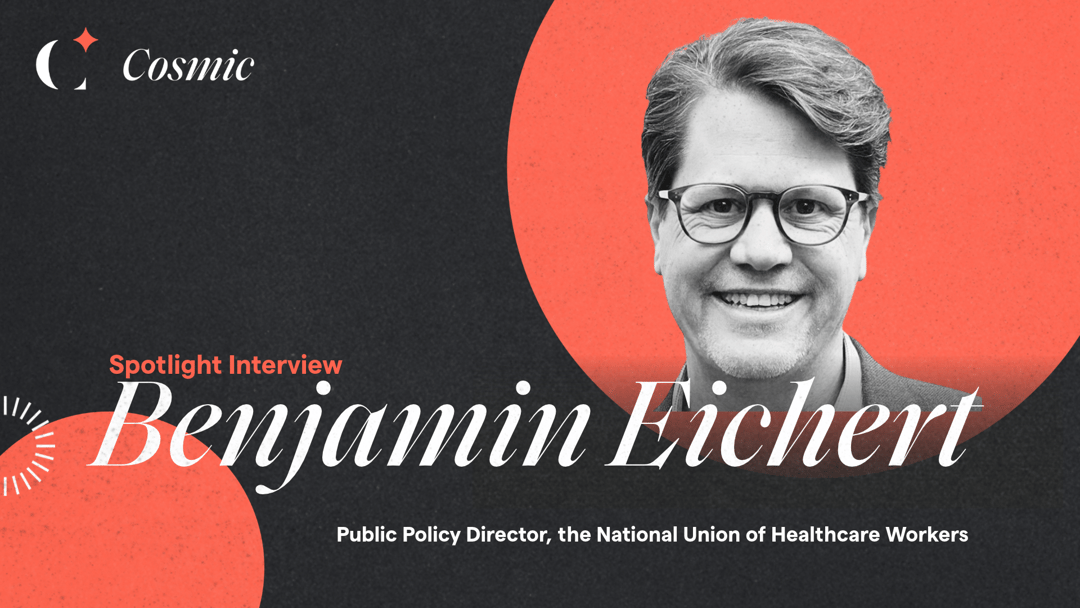
Most nonprofits keep politics at arm's length. Benjamin Eichert thinks that caution costs them more than they know, because some of the change their missions call for can only happen through policy, and 501(c)(3)s have more room to work there than most of them use.
Benjamin started out making documentaries about progressive social movements, spent about ten years as a union organizer, and moved into public policy, first on climate at the Romero Institute and now as Public Policy Director at the National Union of Healthcare Workers, where licensed mental health providers make up the largest group of its roughly 19,000 members.
His approach to strategy starts with a three-year plan and puts most of its energy into the campaign plans underneath it, each with a goal, a deadline, and milestones concrete enough to tell you plainly whether you hit them. Then comes the daily work of assessing what changed, probing new openings, and letting the evidence overrule your hopes.
SB 903 shows what that looks like in practice. The bill would have required a licensed human to review and approve any clinical output from AI in psychotherapy, including the triage tools many health plans already use as the front door to care. NUHW helped build a coalition of more than 60 organizations, negotiated with industry groups, amended the bill based on what its own members were seeing, and moved it through the legislature with near unanimous bipartisan support. Governor Newsom vetoed it anyway, and the union plans to bring it back.
The same honest self-assessment changed how Benjamin's field understands California's mental health access crisis. Years of efforts built around a provider shortage didn't move the numbers, and a closer look pointed to a market failure: a handful of insurers control most of the market, reimbursement rates are too low, and very few providers accept insurance as a result.
Episode Highlights:
[00:01:20] From documentary filmmaking to union organizing to public policy
[00:02:35] Why most nonprofits steer clear of politics
[00:04:10] Three-year plans versus campaign plans
[00:06:55] Working backward from a goal and a deadline
[00:08:20] Daily self-critique and reading the landscape
[00:12:20] How one webinar led to co-sponsoring SB 903
[00:15:30] Building a coalition of 60+ organizations
[00:17:00] AI at the front door of mental health care
[00:20:05] One way for a bill to become law, a hundred ways for it to die
[00:28:50] Treating AI like a supervised trainee
[00:33:55] The therapist shortage that turned out to be a market failure
[00:42:55] Mentors, dialogue, and what keeps the work going
Notable Quotes:
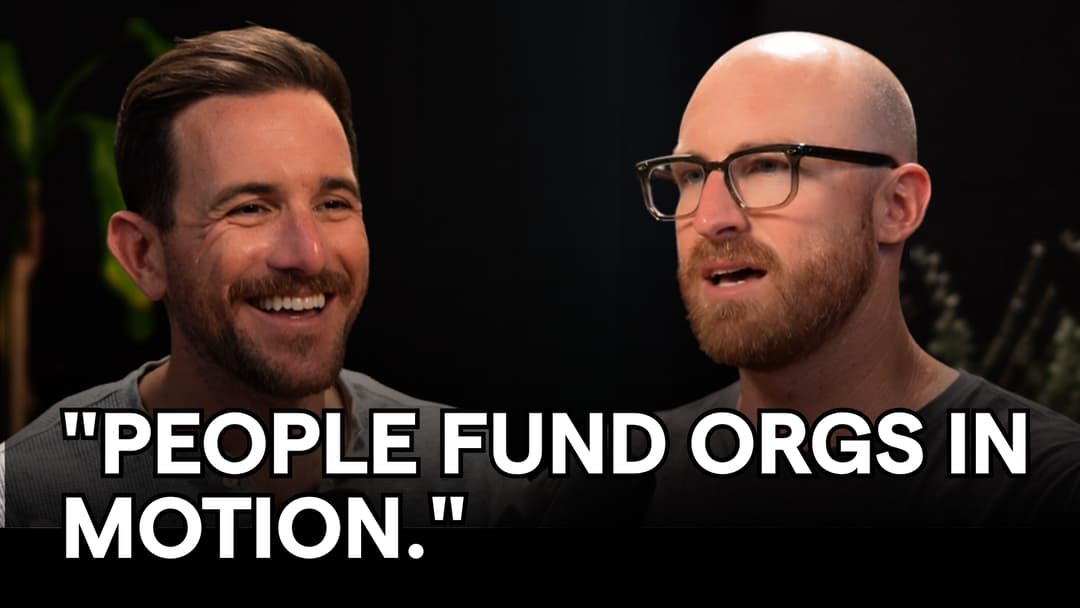
[00:04:05] "Some change can only happen in the policy arena." Benjamin Eichert
[00:10:45] "You make a three-year plan, but the world doesn't sit still for three years while you do your plan." Eric Ressler
[00:20:15] "There's one way for a bill to become law and a hundred ways for a bill to die." Benjamin Eichert
[00:21:40] "Politics or the political process or legislation is an underutilized lever." Eric Ressler
[00:24:30] "I've seen many organizations try to advance bills in the legislature that would dramatically impact a particular constituency of people without having engaged with that constituency first." Benjamin Eichert
[00:38:45] "No one's going to get into the pipeline if the carrot at the end of it is simply not big enough to incentivize them to do so." Benjamin Eichert
Resources & Links:
- National Union of Healthcare Workers: Benjamin's union, where he serves as Public Policy Director
- Benjamin Eichert on LinkedIn: mentioned at [00:44:55]
- SB 903 introduction, Senator Steve Padilla: the AI in psychotherapy bill NUHW co-sponsored
- Governor Newsom's SB 903 veto message: the September 30, 2026 veto
- Illinois Wellness and Oversight for Psychological Resources Act (HB 1806): the 2025 Illinois law SB 903 was first modeled on
- SB 221 (Wiener), Timely Access to Care: California's 2021 timely access law for mental health appointments
- California Health Care Foundation, 2024 Health Policy Survey takeaways: the survey on unreasonable wait times for mental health care
- Romero Institute: where Benjamin worked on climate and environmental justice policy
- Lakota People's Law Project: one of the Romero Institute programs Benjamin worked with
Full Transcript:
Benjamin Eichert [00:00:00]: There's one way for a bill to become law and a hundred ways for a bill to die. So even if we have to spend two years instead of one or maybe even three years to pass legislation that can change the landscape and set in place the series of rules that everyone has to follow that's going to protect providers, that's going to keep humans at the center of mental health care, totally worth it. It's absolutely critical and it doesn't always happen. I've seen many organizations try to advance bills in the legislature that would dramatically impact a particular constituency of people without having engaged with that constituency first. And it's not an effective way to do it and those bills most often don't get very far.
Eric Ressler [00:00:45]: Benjamin Eichert, welcome to the studio. Thanks for joining me today.
Benjamin Eichert [00:00:50]: Oh, thanks so much. It's my pleasure to be here.
Eric Ressler [00:00:50]: So we go way back actually. We've collaborated over the years at various organizations, you as a client. And I have to say, man, we've worked with a lot of really smart people and you are on my top five list of people who I feel the most peer level with in terms of shared learnings over the years. Thank you. So first of all, thank you for that. Stoked to have you in the studio for a conversation today. For our listeners who haven't maybe met you before, can you give us just a brief history of who you are, where you're working right now, what you're working on, and then we'll get into it?
Benjamin Eichert [00:01:25]: Sure. Yeah. Well, first off, my very first career after high school was as a documentary filmmaker and my two best friends and I started a documentary film company and we made documentaries about progressive social movements. And that was really my entree into the social movement space and working for social justice. I eventually found my way into the labor movement and went to work for a labor union in the Bay Area, was a union organizer for about 10 years, and then decided that I wanted to shift into working in public policy. And so did some formal education and made the shift to that space when I went to work for a nonprofit, which is how I met you, went to work for the Romero Institute and their Lakota People's Law Project and their Let's Green California program. And we were working on environmental justice policy, climate policy, renewable energy, decarbonization, and went from working primarily on local and regional policy, that's where we started, and then moved up and eventually ended up working on statewide policy.
And after I left the Romero Institute, I went back to work at a labor union. I'm now working at the National Union of Healthcare Workers as their public policy director.
Eric Ressler [00:02:35]: Yeah. We're going to get into some of the projects that you have going right now, but I think where I actually want to start today is a question that I've been thinking about that I think you are uniquely positioned to answer or at least to riff with me on, which is that so much policy change, but also just social change in general happens through politics, whether that's local politics or regional or state level politics or even national or international politics. And especially when we're talking about some of the most impactful systems level social issues like climate change or climate justice, but many other causes as well. And yet I feel like many, if not most, nonprofits don't want to touch politics, especially right now when politics is so polarizing. Why do you think that is or do you disagree?
Benjamin Eichert [00:03:20]: Yeah. First off, 501(c)(3) organizations have certain constraints around what they can do politically, especially when it comes to partisan politics. But I think that there's actually more that they can do than most of them do. There are limits, but those are limits. You can move into the political and the policy space. So I think that's one of the reasons they stay away from it is there's just a concern and maybe an approach of just being a little bit more conservative about not wanting to risk or gamble anything. But I think when making that decision, organizations are maybe giving up more than they really should as far as their mission is concerned because I think you're exactly right, some change can only happen in the policy arena.
Eric Ressler [00:04:10]: Yeah. Where do you personally draw the line or the other big theme I want to talk to you about today is putting your strategist hat on because although you've had many titles over the years as we've worked together, I've always seen you at the end of the day as a deeply strategic person and owning the strategy of any given initiative at the organization that you're working for, or at least being highly integral into shaping that strategy. How do you think about that when you're in the seat and you have some kind of stated goal or outcome that you're working towards? Because my sense is I've never seen you hand me a strategic plan, like a three-year strategic plan and said, "Eric, this is what we're working towards. Let's go." It's always been much more focused and much more clear, which has always been refreshing to me, frankly, because there are oftentimes where that feels like I'm pulling teeth to get it out of clients.
So I'd just love to hear how you've thought about that and how that came to be for you. Is that through just hard earned experience or mentorship or inspiration from other social change leaders that you follow and have learned from? Or is it just intuitive to you?
Benjamin Eichert [00:05:20]: Maybe a little of everything. It's interesting to hear you say that. There definitely is a three-year plan. There's even a five-year plan, but that's not where I stop. Putting together the three-year plan for me is the starting point. And partially through experience, partially through training and mentorship, where I immediately gravitate toward is developing the campaign plan. And so that's thinking, okay, if this is our three-year strategy, where are we trying to get to? What's the world that we want to see in three years? And what are the milestones? What are the significant markers that we have to get to in order to eventually get to that three-year place? And so that three-year plan is built up of a number of campaign plans. And that's where I really spend maybe more of my time focusing because I think if you put together a well thought out and a well-executed campaign, you are advancing towards your three-year plan or your three-year strategy, but along the way, you're also opening a lot of other doors.
And so you might find that after you complete maybe the first campaign that's part of that longer goal, you now see that there are multiple paths to getting to that three-year goal or that three-year strategy. Does that make sense?
Eric Ressler [00:06:35]: So what you're saying is that there is a plan, but you're also not etching it in stone and following it without leaving room for new ideas, new learnings, pivots even at times when needed. How do you think about when to stick to that plan versus when to change your ideas or your plans?
Benjamin Eichert [00:06:55]: Yeah. Well, let me talk a little bit more about the plan first and then let's talk about how it morphs, I think. So for me, the campaign plan, and a lot of this I learned in the labor movement. Labor unions have been doing this for decades, generations. They're really good at it. Many of them are. You identify your end goal. What is that thing that we're trying to accomplish and by when do we have to accomplish it? So you have your goal and you have your deadline. And once you have that, then you work backwards. This is something common that happens in the electoral world as well on election campaigns. What's our goal? Win the election, what's our deadline? Election day.
Eric Ressler [00:07:30]: Election day.
Benjamin Eichert [00:07:30]: And you work backwards from there and you really think through every step and you identify what are the sub-component goals that are going to be necessary to meet in order to hit that larger campaign goal. And you think through everyone, what are the people that need to be involved? What are the skills that we need to be part of the team? What are the resources that we need to get it done? What are the levers that we're going to need to pull? And so you have your campaign goal and deadline, and then you have these milestones along the way. And for me, it's always really beneficial to quantify those milestones. What does that look like in terms of something tangible, something that we can point to and say we did it or we didn't do it?
Eric Ressler [00:08:15]: Yeah, it's objective. It objectively happened or it didn't.
Benjamin Eichert [00:08:15]: Yeah. And so you want that objective goal, but then as you're advancing towards it, I think this is the most important thing is we go through a constant process of self-evaluation and self-critique. Ideally, you're doing that literally every day, asking yourself at the end of the day, what did we do today to advance towards that goal, to advance towards that plan? Or in the labor movement, what did we do today to make ourselves a stronger union? And you reflect on that and then you assess. You try to be honest with yourself about where you're falling short. You try to be proud of yourself when you're exceeding what your goal is or your milestone. And then as you head into that next day or that next week or that next month or whatever it is, I try to start by assessing the landscape. What does it look like now and how does it look different from the way it looked a week ago or a month ago when we started?
And what does that mean? Has a new opportunity opened up? Has a door closed? And if the landscape has changed and maybe you're not sure about what that means, then we go through a process of probing, right? Well, let's look at what the possibilities are for action today or in the next week and let's try some of them and let's see what works and what doesn't work. And again, that's why the quantifiable assessment is so important is you want to be able to measure that in a realistic way where your own hopes or your own intuitions don't mislead you or misguide you. So if you can really assess each opportunity or each potential path forward in a quantifiable way where you're measuring it, and then you can sit back dispassionately and look at that and say, "Oh, here's the thing that I didn't think would necessarily work, but it's working." And so let's shift a little bit because there's a path there to get to where we're going and there's this data, this evidence that shows that this path is working and that it's fruitful.
So let's go down it. So that process of assessing, probing, exploring, and then acting and then assessing again, it's an iterative process.
Eric Ressler [00:10:25]: Exactly. Yeah. And I want to underline what you're saying. And I think the reason that I often pick apart these three to five year strategic plans is because they don't... What I see is teams aren't always doing what you just mentioned, which is assessing, you called it the landscape. I refer to this as the state of play because you make a three-year plan, but the world doesn't sit still for three years while you do your plan. It's constantly changing and it feels like it's changing more quickly than ever. So I think this is something that, to me, in observing this seems very accepted and intuitive when it comes to individual candidates running for office. It's like the daily news cycle, and I don't think it's quite as intuitive to many social impact organizations in the same way, although I think that's changing too. So I like what you're saying, which is that you start with these big picture goals or a really clear outcome or timeframe.
I refer to this often as your desired future state. What does that actually look like? And then reverse engineer from there, what would need to be true for us to get there? What team do we need? What talent do we need? How much funding do we need? How do we organize? What other people do we need to get involved to make this happen? I distinctly remember on some of the campaigns that we've worked on before, you guys had done a lot of work to think about who are the actual organized groups that already exist that we can bring in and invite in to our coalition to... And that's just one form of this, but what are some of the examples of what some of those milestones and measurements might look like for you? And feel free to talk about a specific campaign and maybe we could even get into the piece of legislation that you've been working on.
Benjamin Eichert [00:12:15]: Let's talk about that bill and what its genesis was and how it turned from simply maybe a notion of what was important into something tangible that we were advancing. So I think a couple of years ago with the rise of large language models... Well, I should go back a little bit. So the union that I currently work for, the National Union of Healthcare Workers, we're a union of about 19,000 members who work across the range of healthcare professions, but the largest group within our union are licensed mental health providers. So psychologists, licensed clinical social workers, marriage and family therapists, substance use disorder counselors. And with the rise of large language models and AI, we quickly realized that these tools, this technology was going to impact not only the profession that our members work in, but also the patients that our members serve. So we immediately set about trying to understand it as best as we could.
We put together a team within the organization to do research and to think about what are the ways that we need to educate our members, what are the strategic things that we should be concerned about and working toward?
We started to develop some in-house expertise around the technology and we put together a webinar. We said, "Well, let's start by educating ourselves and our members." We put together a webinar last year where we brought together three professors who were working at the intersection of AI and mental healthcare. We had more than 350 clinicians attend that webinar, plus about two dozen policymakers from Sacramento.
Eric Ressler [00:13:55]: Nice.
Benjamin Eichert [00:13:55]: We put the invite out to legislative offices and staff. In doing that, it put our organization on the map a little bit as someone who was trying to be a thought leader in that space. There was state senators, Senator Steve Padilla, who had been doing a lot of work in that space, and he had an idea for a bill that was replicating something that Illinois had done last year. We ended up being invited to become a co-sponsor of that bill together with the California Psychological Association, California Association of Marriage and Family Therapists, and the California Behavioral Health Association.
And that bill was Senate Bill 903. The whole goal of the bill is to regulate the integration of AI into psychotherapy. What is the technology allowed to do? What is it not allowed to do? What can it do with certain guardrails? The bill was originally introduced, modeled very closely after Illinois law, but we expanded it in certain, I think, very important ways. We refined it in certain very important ways.
Ultimately, I'll start with the end. The bill passed out of the California state legislature with near unanimous bipartisan support. The vote was 114 to one, but then it was vetoed by Governor Newsom. So a disappointing end, but the process of getting there was important. It was impactful. And so what we did is said, "Well, what's it going to take to get a bill like this passed? How do we build enough strength? How do we build enough power to win the votes that this bill needs to get through?" And so one of the very first things we went about doing was trying to build a coalition around it. And so we thought about what are the organizations that care about these issues? We put together a great coalition that included labor unions, it included mental health advocacy organizations, child safety advocacy organizations. It included technology safety, AI safety organizations, organizations that are specifically focused on mental health policy, really a very broad coalition.
I can't remember the exact number off the top of my head, but I feel like I can confidently say there were more than 60 organizations that were part of the coalition coming from a whole range of industries and spaces.
With that coalition, with the co-sponsors, with the author, we engaged stakeholders, so we engaged with those organizations. We engaged with the industry. We had meetings with the California Medical Association, the Telemedicine Association, the Hospital Association and others. We heard their concerns. We tried to find a middle ground with them when that was possible. We amended the bill. And then importantly, we listened to our union's own members and we asked them and heard from them, "How is AI being used in your workplace? How are you seeing it impact you and your patients?" We adapted the bill to account for those things. For example, one of the things that this bill would have done had it been signed into law is it would've regulated triage and screening. So in healthcare, triage is when you are first assessed by someone or...
Eric Ressler [00:17:15]: First touchpoint really, right?
Benjamin Eichert [00:17:15]: First touchpoint, yeah. So you can think if you feel like you need mental healthcare and you call up the Department of Psychiatry with your provider and someone's going to talk to you and say, "Eric, what's going on? What are you feeling? What do you feel like you need?" That's an intake, that's a triage. And there's an assessment that's happening of how urgent is your need? Do I need to recommend that you go to the emergency room right now? Can we schedule you an appointment that's 10 days out or maybe a couple of days out? So there's an assessment of the urgency and the type of care that you need. Our members saw that that's where AI was being used right now today. Provider groups, health plans are using digital algorithms and AI tools to conduct intake, sometimes assisting a human, sometimes not. There are apps now that will flash up a question to you, "Hey, have you been feeling depressed or anxious?" And you start walking through a series of questions and a series of prompts, and there's a proprietary algorithm that that group is using to make an assessment of you and recommend care for you.
And most of the other bills, there's at least half a dozen states in the country that have passed bills on this topic in this area, none of them cover that front door to care. So SB 903 would've been the first to cover that front door. And again, the addition of that to the bill was something that came about as a result of talking with our members, engaging with them and hearing from them what's happening on the front lines.
Eric Ressler [00:18:50]: Hey friends, real quick before we continue today's episode, I'm Eric Ressler, founder and creative director at Cosmic. Cosmic is a creative agency purpose-built for nonprofits and mission-driven organizations. For the last 15 years, we've helped leaders like you nail your impact story and sharpen your strategy, but we're not here to just leave you with a fancy slide deck and a pat on the back. We roll up our sleeves and help you bring our ideas to life through campaigns, creative and digital experiences. Our work together helps you earn trust, connect deeply with your supporters, and grow your fundraising and your impact. If you value the thinking we share here and want it applied to your biggest challenges, let's talk at designedbycosmic.com. All right, back to today's conversation.
We opened this episode with me saying, "Hey, why don't more nonprofits do politics?" And then hearing how much time, effort, and energy went into this big swing approach just to have it vetoed. And now I'm like, "Okay, maybe this is why." Clearly you all thought and planned that that could be an outcome, right? That wasn't obviously the result you're looking for, but it probably also wasn't one that you hadn't at least considered.
Benjamin Eichert [00:20:05]: Yeah. I remember the very first conversation I ever had with our lobbyist in Sacramento is he told me, "Look, kid, there's one way for a bill to become law and a hundred ways for a bill to die." And so you know that going in and that's part of the process. Even though it was a big lift and it was a big campaign and we didn't get the outcome that we wanted and that we think was the right outcome, we're going to introduce next year either this bill or a similar version of it, right?
Eric Ressler [00:20:35]: Yeah.
Benjamin Eichert [00:20:40]: And the reason for that I think is actually fairly straightforward. This technology will significantly impact the work that licensed providers do. It is already...
Eric Ressler [00:20:50]: Already doing that.
Benjamin Eichert [00:20:50]: Already doing that. It's already significantly impacting the patients that they serve. And to go hospital by hospital or clinic by clinic or provider group by provider group to try to create policies that are safe for providers and patients would take decades. And so even if we have to spend two years instead of one or maybe even three years to pass legislation that can change the landscape all at once and set in place a series of rules that everyone has to follow, that's going to protect providers, that's going to keep humans at the center of mental healthcare, totally worth it.
Eric Ressler [00:21:35]: Right. And I think that's the trade off and why I think politics or the political process or legislation is an underutilized lever because I can't really imagine, and maybe there even isn't any other way you could create that much change all at once to try and do it, to your point, hospital system by hospital system. Or even if you think about, and maybe this is part of your campaign, you tell me, a more grassroots effort there. Ultimately, we can't trust an entire network of hospitals and providers to just bend to the will of the people. This is why we have a system and we have laws. I'm not trying to make a case here that every social impact organization can only and must only do their work through the political process, but I do think that there's a clear role that it must play for some of these issues, especially as they become bigger and bigger in scope and scale.
Benjamin Eichert [00:22:35]: Yeah. I want to be clear. We are also trying to implement these rules hospital by hospital, right?
Eric Ressler [00:22:40]: Sure.
Benjamin Eichert [00:22:40]: Yeah. We are in negotiations with a number of big provider groups and health plans where we want to see similar rules implemented in the workplace, and that's really important because part of that process of doing that is there's so many things that come along with it. There's an education that's happening with the members who are there on the front line. There's a negotiation process where you're understanding what the other side's concerns are, what their interests are, and it helps you see when those are reasonable and when they're not. You're building strength as you go through that process, and at some point that strength can be shifted over to any other number of other campaigns or goals that you're working on.
Eric Ressler [00:23:25]: Yeah, I think that's an important point. I think the other reason that's important is because, and maybe this is me setting up a little bit of a false dichotomy here, you also can't or shouldn't just try and pass social change strictly through legislation without engaging the people that it affects, including the general public. I think that comes down to building political will, I guess, and buy-in. And what I'm hearing you say is that a lot of that is engaging the people who should have a seat at the table from all different sides, whether that's the lawmakers or legislators, but also providers, also the professionals, your members, the general public who's going to be getting the benefits of the service ideally. So it's not really an either or, right? I think a lot of the best bills and laws that have ever passed have been done in community.
And so clearly you guys are doing that too.
Benjamin Eichert [00:24:20]: Yeah. And it's commonly referred to as stakeholder engagement in the public policy realm. And yeah, it's absolutely critical and it doesn't always happen. I've seen many organizations try to advance bills in the legislature that would dramatically impact a particular constituency of people without having engaged with that constituency first. It's not an effective way to do it, and those bills most often...
Eric Ressler [00:24:45]: Don't pass.
Benjamin Eichert [00:24:45]: Don't get very far.
Eric Ressler [00:24:50]: Yeah. And so you said you had 114 to one in favor?
Benjamin Eichert [00:24:55]: Yeah. So when a bill goes through the legislature, it's referred to any number of what are called policy committees. So this bill was referred to two policy committees. It was referred to the Committee on Privacy and Consumer Protection, which is in California, that's the committee that basically has jurisdiction over all things artificial intelligence now. And it was referred to the Committee on Business and Professions, and that's because the way that the bill worked is it talked about what licensed providers could do and not do, and the Business and Professions Committee governs medical licenses and other such licenses. So it was referred to those two policy committees. It's called a policy committee because they look at the bill through a policy lens, right? What does this mean from a policy perspective? The bill also has to go through the appropriations committee and the appropriations committee is not like the appropriations committee in Washington DC.
What this committee basically does is look at a bill and say, how much is it going to cost? The whole appropriations process is very opaque. There's not a lot of transparency into it. A lot of bills die in appropriations. It's probably the most common place that a bill dies. SB 903 went through two policy committees in the Senate where it was introduced. It got unanimous votes in all of those committees, not a single no vote.
Eric Ressler [00:26:25]: Wow.
Benjamin Eichert [00:26:30]: It went through the appropriations committee, then it went to the assembly, it went through the Assembly Business and Professions Committee, and I believe it got no no votes there as well. Then it went to the Assembly Committee on Privacy and Consumer Protection. Then it got one no vote, and then it went to appropriations, it got out of appropriations. Then it went to the floor. Oh, actually, I forgot. It also went to the Senate floor before it went to the Assembly. So it went through the Senate and the Assembly got one no vote. Because it had been amended in the Assembly, it went back to the Senate because the Senate has to concur in those amendments, and it passed the Senate 40 to zero, and there are 40 senators, so every single sitting senator voted for the bill. So the whole way through, there were only two no votes and it was the same assembly member.
So basically one person voted against the bill. So it enjoyed really broad bipartisan support. And when we were talking with legislators and lawmakers and their staff about the bill, we found receptive ears on all sides of the aisle in all corners of the legislature. I think the issue is really an important issue. Our mental health is sacred, right? It's a space that we want to protect, and I think maybe more so than almost any other realm, the idea of an unproven technology that we know has a tendency to go off the rails is going to be allowed to intrude into our mental space is pretty scary.
Eric Ressler [00:28:05]: Well, and so far, the track record isn't very good, especially as it relates to these tools being used in lieu of or in addition to therapists. There's been a couple of really high profile cases of folks committing suicide and being driven to AI psychosis who are already maybe vulnerable individuals. And so as much as there's certainly a lot of potential with these tools when you use them skillfully, this is an area where it does seem like even some of the most bullish AI people are like, "Well, maybe not here at least yet or in this way."
Benjamin Eichert [00:28:45]: Yeah. And essentially what this bill did is it said AI can be used to provide administrative support, supplementary support, and it can expand clinical capacity. It can help with the clinical function, but any output that's clinical in nature has to be reviewed by and approved by a human licensed professional. So it still kept the human in control of the process and it created a space for the technology to, again, expand capacity, increase access, but there was that backstop. The human is the backstop in case AI is hallucinating, in case there's embedded bias in the AI based on the data that it was trained on, or in case it goes off the rails, like OpenAI and Hugging Face. For anyone that knows about that incident, ChatGPT was given a goal and it found a sneaky way to achieve that goal by breaking out of its sandbox and hacking into another organization that it thought had the answers to the question it was given.
Well, if you're calling up a health plan to get mental health care and there's an assessment taking place of how urgently does Eric need care? What kind of care does Eric need? It's essentially diagnosing you. What if that diagnosis is a hallucinated response? What if the AI has some goal that it's trying to achieve that doesn't, and it finds a path to achieve that goal that doesn't include the best care possible for you? We want a human there to review and approve that and make sure that your interests as the patient are front and center.
Eric Ressler [00:30:25]: Yeah. It's oddly reminding me of some of the same complexities around AI and warfare. Whereas on the battlefield, there's always a human in the loop or not as much these days, but traditionally there's been a human in the loop who has a sense of morality and a sense of patriotism. And now that obviously hasn't always gone according to plan either, but there's always a stop guard there that without a human in the loop, it does start to get pretty scary pretty quickly. And even I can think of an example, and maybe this is one that came up where a particular healthcare network has some goals, some company goals around improving mental health outcomes, which is a great goal to have. But if the AI is set on that goal and one way to improve mental health outcomes is to ignore signals that people need mental health, you can achieve that goal on paper, but actually be hurting people in the process.
Benjamin Eichert [00:31:25]: Yeah. Or I think what is maybe more likely to happen is that a health plan has an AI tool that's assisting with triage and screening and it's given multiple goals. Care for the patients, create efficient schedules for providers. Oh yeah, and minimize our bottom line. And maybe in pursuit of that last goal, the AI finds, oh, I can achieve that goal by doing some other things that are going to compromise the other two. And that's really dangerous. And there's no way for the government to look inside the algorithm that any particular organization is using and to see what data it was trained on and what goals it was given. But what we can do, I think fairly easily is we can have a licensed provider look at the output from that algorithm and evaluate it and say, is it safe? Is it right? Does it make sense?
Am I going to put my license behind it and approve it for the care of this patient? We think that's the sensible way to go. One way to think about it is you could say the bill would've allowed an AI tool to play the same role as an associate or someone who's in training, a trainee where if you just, for example, got your degree in social work and you're an associate, you're in training to become a licensed clinical social worker, you work under the supervision of someone who's already licensed and you have to perform however many months and hours of work. And you can do all the things, but they don't get communicated to the patient or relied upon in that patient's care unless your supervisor reviews and approves them and signs off on them. So the bill said, "Yeah, we're going to take that existing structure that's been around for decades or longer and we're going to apply it to AI.
It can basically fulfill the function of a trainee, but not more." And so very disappointing that the governor vetoed it because in some way it's now allowing organizations out there in underregulated areas of the mental healthcare space to treat these AI algorithms as more than a human trainee.
Eric Ressler [00:33:35]: That doesn't sound good. I'm going to zag us here a little bit to another topic.
Benjamin Eichert [00:33:40]: Yeah, absolutely.
Eric Ressler [00:33:45]: Although we could go on all of this and at some point I kind of want to. So prior to recording, you were sharing this story with me that I'd love to bring onto the pod here.
Benjamin Eichert [00:33:50]: Sure.
Eric Ressler [00:33:55]: Around something you've found yourself in, and I've seen other orgs deal with this too, where there's some kind of almost like zeitgeist understanding around, well, this is the problem. And when you actually dig in, you question that a little bit and you realize maybe that's not actually the problem. I think the example you gave was around that there's this shortage of healthcare practitioners and that's the problem and why it's so hard to get a good licensed therapist. And it turns out it's a little bit more complicated than that. Would you mind digging into that with me?
Benjamin Eichert [00:34:20]: Yeah. So it's true nationwide, but it's especially true in California that it's very difficult to get a mental healthcare appointment with someone. And for the longest time... Well, I should actually say that California is one of the worst in the country. I think every year the California Health Care Foundation does a survey and I think something like 55% of Californians who said they tried to get mental healthcare had to wait an unreasonably long period of time to get an appointment with a provider. And several years ago, Governor Newsom declared that California was experiencing a mental health crisis. So in a state that's having a crisis, if no one can get an appointment with someone to give them care, that's a problem. And the consensus, the conventional wisdom was that this was due to a shortage of mental healthcare providers. And so there were a couple of different approaches that were taken, including by us and our allies and other advocates.
On the part of the state, all the traditional responses to a workforce shortage were implemented. Let's stand up new training programs, new schools, let's provide tuition reimbursement incentives to get people into those training pipelines. On the advocacy side, on our side, we looked at this concept in healthcare called timely access. We said, okay, so if people are waiting an unreasonably long period of time to get a provider, can we compel health plans and insurers to provide timely access, set some sort of a standard. And there was a bill that was passed, SB 221, it was a timely access law that said health plans and insurers have to have a big enough network of providers to ensure that they can give a timely appointment to their plan members who need care. And those solutions were implemented and things weren't really getting better. And a number of organizations continued to do some really unbelievably amazing research into the area.
And what started to emerge was a new understanding of what was actually happening. And so again, we as an organization were working on timely access. Let's pass a timely access law. Let's try to work with regulators to improve enforcement of timely access laws. Everything around this concept of timely access while others were saying, let's create new schools, let's create tuition reimbursement, let's get more people into the pipeline. Well, the new understanding that has emerged is that what's really happening is a market failure, that it's not that there aren't enough providers. Now in California, it is true that there are not enough providers in some geographies and within some cultural groups. So there might be a shortage of providers who can provide a particular type of culturally or linguistically appropriate care. It's true in a few places, but for the most part, there's an abundance of providers.
There are more providers in coastal California, more mental health providers than almost anywhere in California. And if you live in Palo Alto, you could probably walk down University Avenue and hit any number of psychologists with a stick. So that's not the problem. What it turns out the problem is, is that not enough providers accept insurance and they don't accept insurance because the reimbursement rates from insurers are just not enough to sustain that profession. And there's a great disparity in fact of the pay that insurers pay to say a psychologist versus a physician assistant. A physician assistant that actually has a little bit less training than a psychologist is getting paid more or reimbursed more for a similar office visit than a psychologist. And there's a whole host of reasons that that's the case that we won't necessarily get into, but that disparity is real. The fact that psychologists and social workers and therapists aren't getting reimbursed enough by insurers to make them want to be part of an insurance network is a very real issue.
And so once you understand that that's the root of the issue, what you also understand is that opening new schools and improving tuition reimbursement isn't going to solve the problem because no one's going to get into the pipeline if the carrot at the end of it is simply not big enough to incentivize them to do so. It doesn't matter that there's a school that's closer. It doesn't matter that that loan might be forgiven. Even with that loan forgiven, the amount that I'm going to earn just isn't enough. And so that's why in California, very, very few providers, mental health providers accept insurance. In fact, we have the second lowest acceptance rate of insurance of any state, I think except Tennessee in the country. And so what we came to understand is that there's a market failure that's happening. You've got about four insurers in California that control 70% probably of the market.
And they have what we refer to as monopsony power. Monopsony power is like the flip side of monopoly power. In a marketplace when just a handful of sellers control the market, that's a monopoly. When just a handful of buyers control the market, that's a monopsony. And so when health plans go into the marketplace for providers' services, they are buyers of that labor. And these four insurers in California have monopsony power and they use it to drive down the cost for that labor that they're purchasing. And one of the reasons that they can do that is that there's just a handful of them that control the majority of the market and providers are all operating their own little independent business. You've got your practice, I've got my practice. And under antitrust law, we can't get together and say, "Hey Eric, we should call Blue Cross Blue Shield and let them know that if they don't increase the reimbursement rate, we're going to no longer accept their patients or see their patients."
If we were to do that, that would be an antitrust violation. We would be colluding as businesses and we could actually lose our license or get fined, maybe even go to jail. So there's an imbalanced marketplace. And so now rather than focusing on opening new training programs or improving tuition reimbursement or trying to tell the insurer that they have to have more providers in their network, now what we're saying is we need to figure out how to rebalance the market.
Eric Ressler [00:40:55]: Yeah. So we're taking this all the way back to the beginning of the episode, this concept of probing, is that right? What got you guys, not only you, but the entire movement to this understanding is starting to question, wait, it's common knowledge, so to speak, that this is the reason. I've even heard this narrative and I'm not even in the field. And when you start to poke at it a little bit, you're like, wait a minute, is that actually what's going on? Because we're seeing some new data here that doesn't really support that.
Benjamin Eichert [00:41:25]: Yeah. And I think part of that came about because we were trying these things that we thought would work and they weren't working. I had talked about the importance of self-reflection and self-critique and looking at what is it that we've done and did it meet our benchmark? Did it achieve what we had hoped it would? And you have to be honest with yourself when the answer is no. And when the answer is no, then it's valuable to go through this process saying, "Well, what is the reason for that? Why didn't it work? Did we misdiagnose the solution?" And I think that's what happened here is after a number of efforts by not only us, but many, many other organizations to address these issues, there was an understanding that, hey, the things we're trying aren't necessarily working, so let's look for other root causes that maybe require a different intervention.
Eric Ressler [00:42:15]: Yeah. Yeah. So as we move to wrap up here, I want to, first of all, thank you for coming on the show. It's been awesome. Is there any parting wisdom you can give our listeners? I consider you to be a very wise practitioner at this point, and I'd love to just think about how you in any given situation approach these issues. We've talked about probing, we've talked about self-reflection. What keeps you curious, engaged, inspired to do this work? Clearly you're passionate about it, clearly you think it's important, but to me there's more to it than that for you, just watching you operate. What is it that keeps you humming every day doing this?
Benjamin Eichert [00:42:55]: It's a really good question. I'm not sure I have a satisfying answer. For me personally, I had an experience after high school. I took a gap year and I traveled through Central America to do some volunteer work and ended up through pure happenstance coming into contact with an organization in Nicaragua that was working in really remote communities. And that experience, I found my way to it, again, like pure random chance. But once I was there, it was just something I immediately recognized. I said, "This is the kind of work that I want to do with my life." And it really did light a fire inside of me. And I have held onto that vision and to that passion, I would say in large part through the support of mentors and friends. That has been, I think, the thing that has helped me find success in some of the work that I've done, but has also kept that passion going. If you wanted words of parting wisdom, I would say the most important thing I could share is I never hesitate to call on my mentors and advisors.
When I encounter something and I'm maybe even the slightest bit unsure, if there's an opportunity and I think I know someone who's been through that or might have some insight or some wisdom, I try to reach out. And for me, that's the best way to work because then it also just creates this opportunity to dialogue about it. And maybe they don't even have the answer, but in that process of dialoguing about it, we find it together.
Eric Ressler [00:44:40]: And I feel like we've done that back and forth over the years, even if it's about just tech or campaign strategy or whatever it is. And I've always appreciated that. Benjamin, thanks for coming on, man. Is there any place that you'd like to point people either to your current org to support or even where people might follow you if they want to get in touch?
Benjamin Eichert [00:44:55]: Yeah. The organization I work for again is the National Union of Healthcare Workers. Our website is nuhw.org. We're soon going to be having a lot of information on our website about this campaign I was talking about to rebalance the market. That's a big initiative for us that we're going to be unveiling over the coming months. And I am really mostly only active on LinkedIn, but you can find me at linkedin.com/beneichert.
Eric Ressler [00:45:25]: Awesome. Ben, thanks for coming on, man.
Benjamin Eichert [00:45:25]: Sure. Good to see you.
Eric Ressler [00:45:30]: If you enjoyed today's video, please be sure to hit like and subscribe or even leave us a comment. It really helps. Thank you. And thank you for all that you do for your cause and for being part of the movement to move humanity and the planet forward.